
YOASOBI Brings Never Ending Stories Tour to North America
YOASOBI kicked off their North American tour at Boston's TD Garden in August, bringing their synth-pop and electronic rock sound to U.S. audiences. The tour supports their new EP, THE BOOK for.
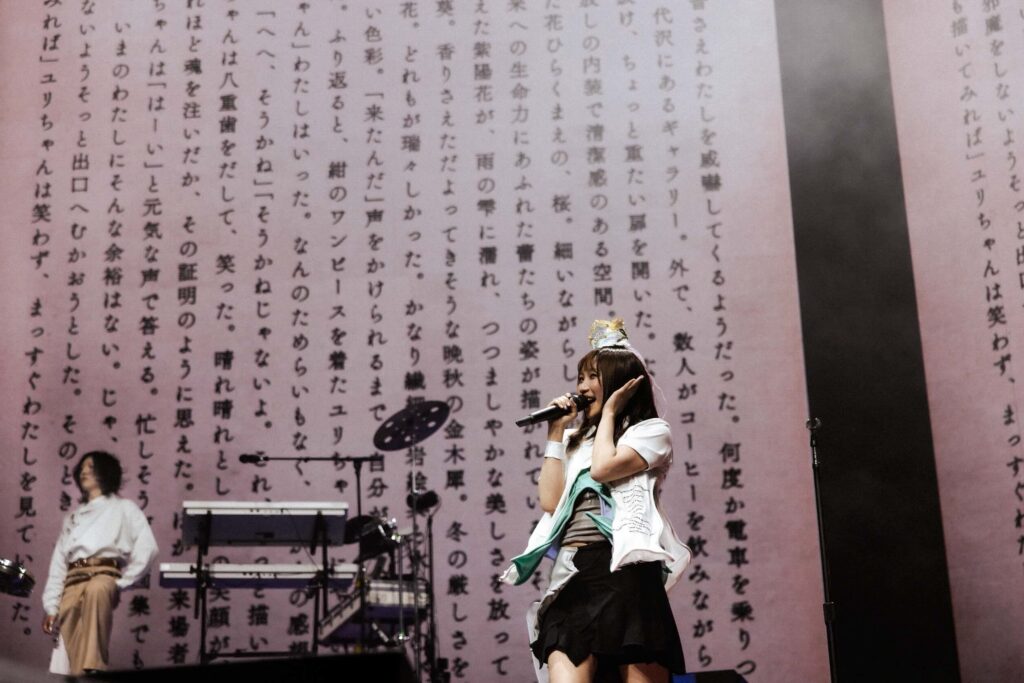
YOASOBI opened their North American leg of the Never Ending Stories Tour at TD Garden in Boston on August 4th, shortly after performing at Lollapalooza on August 2nd. The tour supports the release of their fourth segment, THE BOOK for, an EP that continues the duo's storytelling approach to music.
YOASOBI—producer Ayase and vocalist ikura—create tracks that blur synth-pop, electronic rock, and vocaloid influences, drawing inspiration from existing stories across online posts, letters, plays, games, and books. Many listeners know their work through anime theme songs they've written and produced to match their shows' narratives and characters. Their credits include "Idol" for Oshi no Ko, "Yuusha" for Frieren: Beyond Journey's End, "The Blessing" for Mobile Suit Gundam: The Witch from Mercury, and "Monster" for BEASTARS.
At TD Garden, the band—rounded out by drummer Hiroki Ono, keyboardist Ena Suzuki, bassist and band master Sota Kawakami, and guitarist Assh—brought dynamic energy to the setlist, balancing high-octane opener tracks with mid-show cooldowns before ramping back up for the finale. Stage outfits blended street style and school uniform aesthetics against a backdrop of matching digital visuals.
Ikura kept the crowd engaged throughout, directing fan participation and sharing a personal connection to Boston—she recalled visiting as a child and dreaming of performing there as a singer. Ayase brought charisma to the stage and even offered the crowd a brief Japanese language lesson on common phrases.
The show highlighted what makes J-Pop concerts distinctive: the fan culture of penlights—color-changing light sticks—that fans coordinate by song to create a unified visual display. Fans also perform synchronized body movements to the beat in a practice called "wotagei," turning the audience into an active part of the performance.