
Global Task Force Targets Anime Piracy in Seoul Summit
South Korea convened an international enforcement conference in June with law enforcement and industry partners from multiple countries to coordinate efforts against copyright infringement affecting anime and K-content.
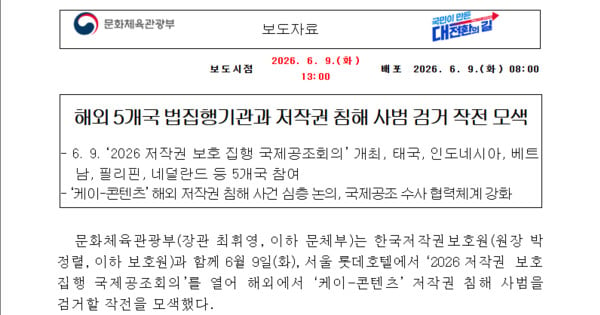
South Korea's Ministry of Culture, Sports and Tourism brought together a coalition of international law enforcement agencies and content industry leaders this month to tackle the ongoing battle against online piracy.
The "2026 International Copyright Protection Enforcement Conference" took place June 9 in Seoul, drawing representatives from Thailand, Indonesia, Vietnam, the Philippines, and the Netherlands. The meeting also included Interpol, U.S. Homeland Security Investigations Korea, and Korean authorities from the Ministry of Justice, prosecutors, and police.
Industry participants included major players like Naver WEBTOON and Kakao Entertainment, reflecting how seriously content creators are taking the piracy threat. These companies have a vested interest in protecting their intellectual property as anime and webtoons become increasingly valuable exports for South Korea.
The conference centered on sharing enforcement strategies and coordinating joint operations to identify and apprehend copyright offenders operating across borders. Discussions highlighted ongoing investigations under Interpol's "Stop Online Piracy" (I-SOP) initiative, recognizing that modern piracy requires modern, coordinated responses.
A key theme emerged: copyright crimes that cross international borders demand global solutions. The ministry emphasized this point, pledging to strengthen its investigative network with international partners and establish more robust channels for information sharing.
This meeting reflects a broader industry shift toward tackling piracy at the source rather than simply managing its effects. For anime fans, the significance runs deeper than legal compliance—robust enforcement helps fund the creation of new series and protects the revenue streams that allow studios to invest in ambitious projects.
The conference also highlighted how anime fits into a larger Korean content strategy. As webtoons increasingly adapt into anime, protecting intellectual property across mediums becomes essential. Companies like Kakao Entertainment benefit directly when their digital properties are adapted into animated series.
While piracy remains endemic to online culture, these coordinated international efforts suggest that enforcement agencies and studios are taking a more aggressive stance. Whether such conferences ultimately reduce piracy rates remains to be seen, but the fact that five countries plus Interpol gathered in Seoul signals serious commitment to protecting creators' work globally.