
Korean Politician Uses Netflix's 'Teach You A Lesson' to Push for Education Reform
A newly elected Gyeonggi Province superintendent is calling for a public debate on creating an "Educational Rights Protection Bureau" after watching Netflix's webtoon-based live-action series. The show, adapted from the webtoon Get Schooled, has sparked discussion about teacher authority and school safety in Korea.
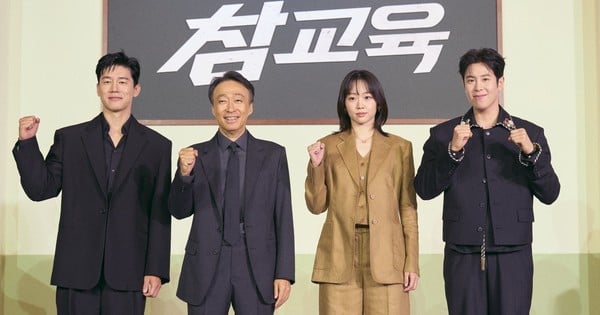
A five-term Korean lawmaker is using Netflix's latest webtoon adaptation as a springboard for education policy reform. Min-seok Ahn, superintendent-elect of Gyeonggi Province, announced on Facebook that he wants to establish a public debate on creating an "Educational Rights Protection Bureau" after finishing all 10 episodes of Teach You A Lesson, which dropped on Netflix on June 5.
In his post, Ahn acknowledged the series contains "violent and exaggerated elements" but argued it reflects real concerns about declining teacher authority in schools. "There must be a reason why so many teachers and parents are watching," he said, positioning the show as evidence that rebuilding trust within school communities needs urgent attention.
Ahn, a member of the Democratic Party elected on June 3, proposed a "Gyeonggi-style Educational Rights Protection Bureau" aimed at creating schools where "students look forward to attending school, teachers are respected, and parents feel secure." He invited public feedback on the initiative.
Teach You A Lesson is based on the webtoon Get Schooled, serialized on Naver Webtoon since November 2020 and created by writer Yong-taek Chae and artist Ga-ram Han. The story follows an officer from the Ministry of Education's Teacher Protection Bureau who works to restore order after corporal punishment is banned. The adaptation has already made waves internationally, topping Netflix's non-English Global TV rankings for two consecutive weeks.
The series hasn't been without controversy. The Korean Teachers and Education Workers Union (KTU) publicly opposed the production last year, citing concerns about its portrayal of violence and the education system. The original webtoon also drew criticism for depicting marginalized groups—including women and people of color—as antagonists, often resolving conflicts through violence.
Ahn's use of the series to fuel policy discussions highlights how webtoon adaptations are increasingly influencing conversations beyond entertainment, particularly around education and social issues in South Korea.